
Light switch wakes sleeping cancer cells and makes them vulnerable again
- Date:
- July 5, 2026
- Source:
- ETH Zurich
- Summary:
- Some cancer cells evade treatment by entering a dormant state triggered by stress hormones. ETH Zurich scientists have created a light-controlled molecular switch that selectively destroys the receptors responsible for this survival mode. In laboratory lung cancer cells, the approach woke sleeping tumor cells and could help make future cancer therapies more effective while minimizing damage to healthy tissue.
- Share:
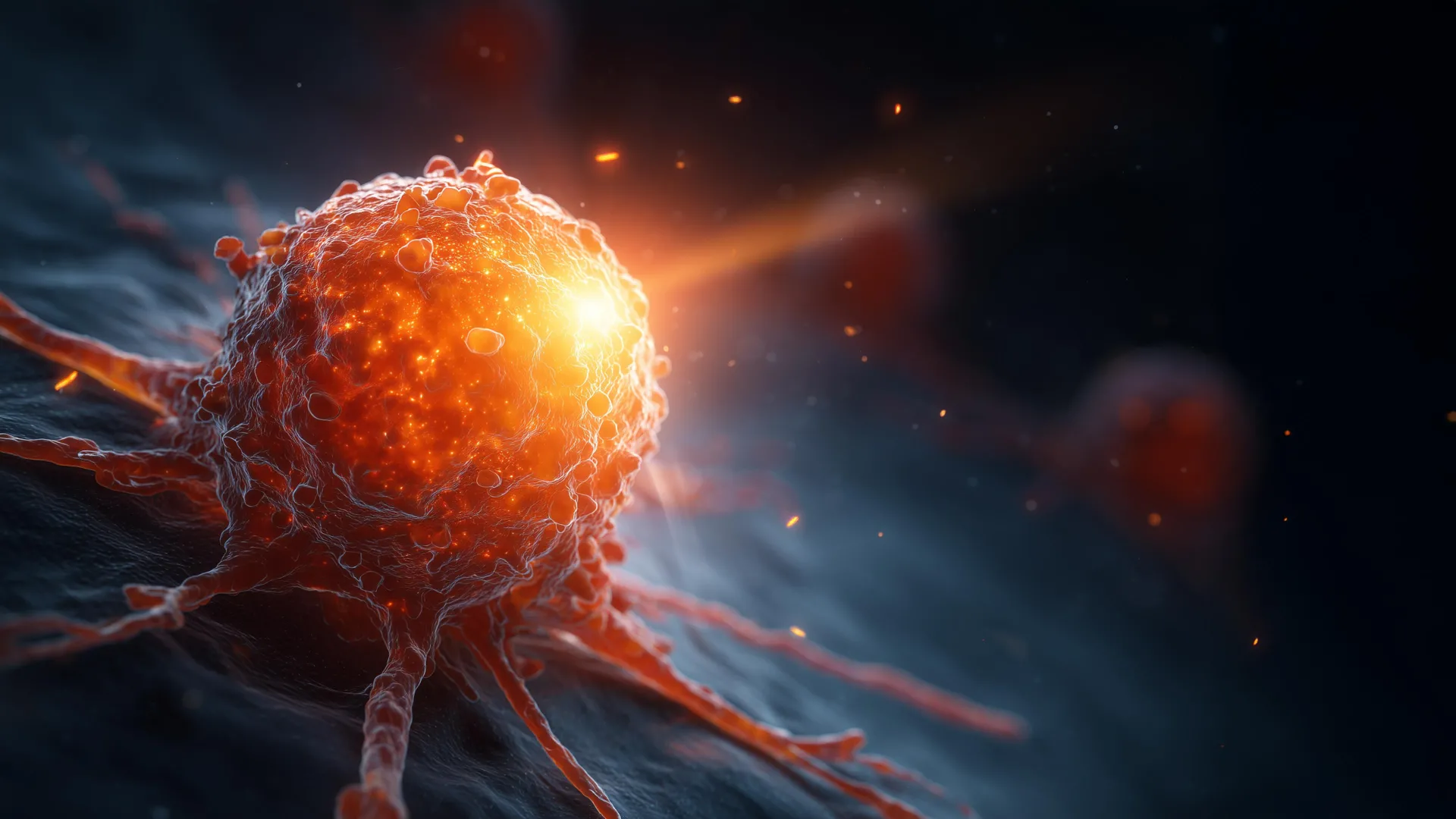
Some cancer cells can enter a dormant, sleep-like state that helps them survive treatment. Instead of continuing to grow and divide, these cells become largely inactive, allowing them to avoid the effects of many cancer drugs.
In certain forms of cancer, including some types of lung cancer, stress hormones can trigger this response. Specialized proteins called glucocorticoid receptors detect those hormones inside tumor cells. Once activated, the receptors can push the cells into a dormant state where cell division slows dramatically. As a result, many therapies become far less effective.
Researchers have been searching for ways to disable these receptors and wake the cancer cells from dormancy, making them easier to target and destroy.
Using Light To Target Tumor Cells
A major challenge is that glucocorticoid receptors are found throughout the body, not just in cancer cells. These receptors play essential roles in controlling inflammation and supporting normal immune system function.
Because of this, eliminating glucocorticoid receptors everywhere in the body would cause serious side effects. Any successful treatment must therefore target tumor cells while leaving healthy tissue largely unaffected.
Scientists at ETH Zurich have developed a potential solution. They created a system that triggers the destruction of glucocorticoid receptors inside tumor cells while allowing researchers to use light to selectively switch off the process in nearby healthy tissue.
"This system is based on existing medical technology and therefore offers a realistic prospect of localized therapies," says Robin Scheuplein, joint first author of the study and a doctoral student in the research group led by Katharina Gapp, Professor of Epigenetics and Neuroendocrinology.
Harnessing the Body's Protein Recycling System
The new approach takes advantage of a natural cellular recycling process. Normally, cells identify damaged or defective proteins and mark them for disposal by attaching a small molecular tag, essentially labeling them as cellular waste. Once tagged, those proteins are broken down and removed.
The ETH Zurich team adapted this process to specifically target glucocorticoid receptors in tumor cells.
To accomplish this, the researchers designed a molecular switch consisting of three components. One part attaches to the glucocorticoid receptor. Another attaches to the enzyme responsible for placing the disposal tag. Between them is a flexible connector.
The connector is the key to the system. Under normal lighting conditions, it remains extended, positioning the enzyme close enough to label the receptor for destruction. The cell then breaks down and removes the receptor.
When exposed to light of a specific wavelength, however, the connector bends. This change prevents the enzyme and receptor from aligning properly, stopping the tagging process and preventing receptor destruction.
Waking Dormant Lung Cancer Cells
The technology emerged from a collaboration among several research groups at ETH Zurich. As part of the project, the team led by Professor of Organic Synthesis Erick Carreira produced multiple versions of the connector component.
Testing showed that two of these connectors behaved exactly as intended. Light could reliably switch the system between an active state that destroys glucocorticoid receptors and an inactive state that leaves them untouched.
The long-term goal is to use this technology for highly precise cancer treatments. Researchers envision injecting the switch directly into a tumor and then using light to deactivate any molecules that move into surrounding healthy tissue.
"Activity can therefore be strictly limited to the tumor core, preserving the surrounding tissue and causing significantly fewer side effects. The effect is reversible and can be controlled precisely," says Scheuplein.
In laboratory cultures of lung cancer cells, the team observed the expected biological response. The treatment rapidly broke down glucocorticoid receptors within the tumor cells. Analyses of gene activity also indicated that the cells emerged from their dormant state.
"Of course, this will now need to be verified in living organisms as well," says Scheuplein.
Potential Applications Beyond Lung Cancer
The researchers emphasize that additional development is still needed before the system can be used in cancer patients.
One limitation is that light can penetrate only a few millimeters into tissue. To create the desired protective boundary around a tumor, the light source must be positioned close to the treatment area. In lung cancer, for example, this could potentially be accomplished with an endoscope.
For tumors located deeper inside the body, the team hopes to develop versions of the switch that respond to longer wavelengths of light, such as near-infrared light, which can travel farther through tissue and do so more gently.
The platform may also have applications beyond glucocorticoid receptors.
"We've developed a modular system that we can also use to switch off other receptors," explains Scheuplein.
Potential targets include the estrogen receptor involved in hormone-dependent breast cancer and the androgen receptor associated with advanced prostate cancer. The system is also ready for use as a research tool to help scientists better understand complex signaling pathways involved in cancer biology.
Story Source:
Materials provided by ETH Zurich. Note: Content may be edited for style and length.
Journal Reference:
- Karina M. Freitag, Robin Scheuplein, Chiara Orlacchio, Viola Ansuinelli, Tommaso Fava, Vincent Fischer, Bohan Zhang, Miriam Kretschmer, Mahshid Gazorpak, Erick M. Carreira, Katharina Gapp. Light-controlled disruption of cancer cell dormancy via photoswitchable stress hormone receptor degraders. Proceedings of the National Academy of Sciences, 2026; 123 (21) DOI: 10.1073/pnas.2528760123
Cite This Page: